



Foundation Waterproofing in Asheville: Stone, Block and Poured Walls Handled Right
Asheville sits on red-brown residual clay weathered from granite and gneiss, and that clay holds water hard through the wet months. When heavy mountain storms dump runoff down the slopes toward your low corner, Foundation Waterproofing in Asheville is what keeps that water on the outside of your foundation instead of in your lower level. We work the building stock as it actually is here: 1900s-1930s Craftsman bungalows and brick Tudors in Montford, Kenilworth and Chestnut Hill with stone or brick foundation walls and partial lower levels; 1940s-1970s brick ranches in Oakley, West Asheville and Haw Creek set into the slope; and 1990s-2020s subdivisions in Swannanoa, Weaverville and Fletcher with poured concrete walls. Full basements are less common here than in the Midwest, so the work usually centers on the walkout, the sloped side of the house and the grade around it. If you have water in the basement, wall seepage or efflorescence, we start with a free basement inspection and tell you plainly what the wall is telling us.
Why Foundation Waterproofing Matters in Asheville's Clay and Hillside Lots
The dominant failure mode here is hydrostatic pressure against below-grade walls after a wet spell, not a single cracked wall. Clay soil holds water and expands, then releases it slowly, so a foundation wall gets pushed on for days after the rain stops. On steep cuts in Beaverdam and the Lake Julian slopes, that pressure shows up on the downhill wall of a walkout basement. In the older neighborhoods, stone and brick walls wick moisture and show efflorescence, and mortar joints open up over time. The French Broad and Swannanoa rivers flood low ground after big rains, and that is a separate problem from the slope runoff reaching your footing.
- Hydrostatic pressure pushes water through block cores and mortar joints and shows up as a wet basement wall after rain.
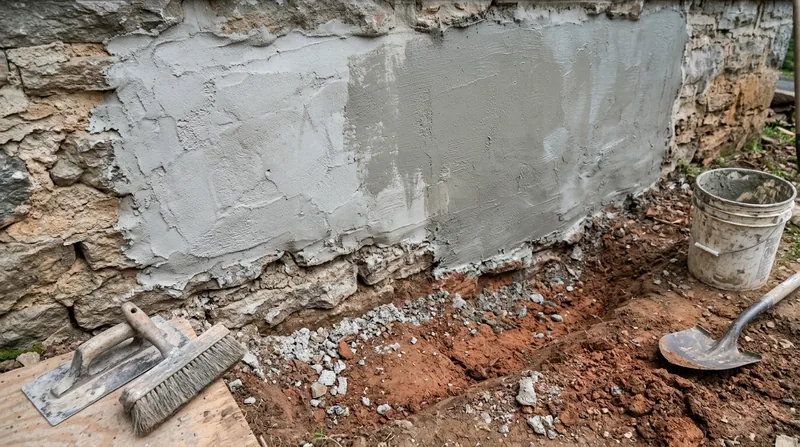
- Older stone and brick foundations in Montford and Chestnut Hill wick moisture and need period-appropriate parging and repointing.
- Clay soil against the wall holds water and heaves, which opens cracks and stresses the footing drain.
- Downspouts and grading that dump water at the foundation overwhelm any wall treatment, so we correct the source first.
- Walkout basements on hillside lots collect runoff at the low corner where the grade meets the wall.
We diagnose which of these is driving your water before we quote a method, because sealing a wall that is being pushed on from behind does not hold.
Key info: A 1920s brick Tudor in Kenilworth showed efflorescence halfway up the wall every March. The cause was a downspout discharging two feet from the foundation and clay grade pitched back toward the wall, not a failed wall coating. We corrected the grade, extended the discharge line and parged the wall, and the seepage stopped without excavation.
For the code side, structural foundation repair and any work that alters drainage or the sanitary connection of a sump discharge commonly require a permit. Rules vary by jurisdiction, so verify with the City of Asheville Development Services Department before work starts.
How We Waterproof a Foundation in Asheville, Step by Step
We match the method to the foundation type and the water source, not the other way around. A poured wall in a Fletcher subdivision with a clean crack gets a different answer than a stone wall in Montford that has been wicking for decades. The sequence below is how a typical job runs from first call to final walkthrough.
- We walk the exterior grade, downspouts and window wells, then the interior walls and floor, and note where water actually enters.
- We map the foundation type (stone, block, brick or poured) and check for bowing, step cracks and efflorescence before choosing a repair.
- We correct grading and downspout discharge so surface water stops loading the wall.
- We repair cracks by epoxy or polyurethane injection with injection ports, matched to whether the crack is active or structural.
- We parge and seal stone and block walls with a coating suited to the masonry, or apply a membrane or crystalline treatment to poured walls.
- Where hydrostatic pressure is the real problem, we recommend an interior drain tile system over exterior excavation, and we explain why.
- We test the discharge and walk the job with you before we call it done.
If a wall is bowing rather than leaking, the fix is structural and we say so up front instead of selling a sealer.
Key info: A 1960s brick ranch in Haw Creek had a shallow lower level set into the slope. The downhill wall seeped every wet season and the homeowner had been told to excavate. We found the footing drain silted and the grade pitched in. We corrected the grade, repaired the drain tile and injected the active crack, and kept the excavator off the property.
Foundation Waterproofing Methods We Use in Asheville
Each method below solves a different problem, and the right one depends on your wall material, the water source and whether the wall is moving. We use the lightest approach that actually stops the water.
| Approach | Description | Best for |
|---|---|---|
| Crack injection (epoxy or polyurethane) | Ports set along the crack, resin injected to fill it full depth from the inside. | Poured concrete walls with clean vertical or step cracks. |
| Parging and masonry repair | Repoint mortar joints and parge the wall face with a breathable coat. | Stone and brick foundations in Montford and Chestnut Hill. |
| Membrane or crystalline treatment | Waterproof membrane or crystalline coating applied to the wall face. | Poured walls in newer Weaverville and Fletcher subdivisions. |
| Interior perimeter drain | Drain tile at the interior footing edge leading to a sump basin. | Hydrostatic pressure where exterior excavation is impractical. |
| Exterior drainage correction | Regrade, extend downspouts and repair the footing drain. | Surface water loading the wall on sloped lots. |
We tell you when simple crack sealing is enough and when the pressure behind the wall means a drain is the honest answer.
Foundation Waterproofing Cost in Asheville: What to Expect
Foundation waterproofing in Asheville generally starts around From $3,500, and that figure covers a focused scope such as crack injection or a small parging and sealing job with grading correction. The number moves with the foundation type, the length of wall involved, access on a steep lot, and whether an interior drain and sump are part of the fix. Stone walls in older neighborhoods take more labor than a poured wall with one crack, and hillside walkouts in Beaverdam or on the Lake Julian slopes can need equipment that flat lots do not.
We give you a written scope that separates the water source correction from the wall treatment, so you can see what each part costs. Get two or three estimates and compare the scope line by line, not just the bottom number. A low bid that skips the grading correction usually means the seepage returns. Our full pricing overview breaks down the ranges by method.
What to Look for in a Foundation Waterproofing Contractor Near Asheville
Hiring for foundation waterproofing near me is mostly about verifying the contractor actually works below grade and will put the diagnosis in writing. Ask for the license and insurance certificate, and confirm the crew is covered for excavation and structural work. Get at least two or three written estimates that state the method and the water source being corrected.
Ask for local references on the same foundation type as yours, stone versus poured, because the work is not interchangeable. Confirm who pulls the permit for structural repair or a sump discharge connection, and verify the threshold with the local building department. If your neighborhood has HOA rules on exterior changes or drainage discharge, check those before work starts. When you are ready, contact us and we will schedule the inspection.
We also tell you when a repair is not needed yet, because a foundation that is dry does not need a drain.
Foundation Waterproofing in Asheville: Pricing Guide
| Service | Price | Details |
|---|---|---|
| Crack injection (epoxy or polyurethane) | Starting at $3,500 | Includes port setup, full-depth injection and cleanup on a poured wall with clean cracks. |
| Parging and sealing for stone or brick | Starting at $4,200 | Covers repointing, breathable parge coat and sealing; wall length and access drive the price. |
| Interior perimeter drain with sump | On estimate | Priced after inspection because wall length, sump location and discharge route vary by basement. |
| Exterior drainage and grading correction | On estimate | Depends on slope, footing drain condition and equipment access on hillside lots. |
| Travel | Included | In Asheville and surrounding areas, no separate call-out or mileage fee. |
| Estimate | Free | Response within 24h at (828) 519-1276, no obligation to book. |
Indicative pricing, the exact cost depends on square footage, finish, and site access. Free personalized estimate within 24h at (828) 519-1276.


