Why Asheville Homes Face Unique Waterproofing Challenges
Homeowners in Asheville know that living in the Blue Ridge Mountains comes with incredible views and a few tradeoffs. One of the biggest is water management. The region receives over 45 inches of rain annually, and many homes sit on sloped lots or hillside foundations where water naturally collects. Add in the heavy clay soils common throughout Buncombe County, and you have a recipe for basement seepage, hydrostatic pressure, and foundation movement.
When water cannot drain away from your foundation, it finds the path of least resistance. That might mean a damp basement wall, a musty smell, or standing water after a storm. Understanding whether your home needs Basement Waterproofing from the inside or the outside is the first step toward a dry, stable home. The right choice depends on your foundation type, the grade of your lot, and how the water is entering.
Interior vs Exterior Waterproofing: How Each Approach Works
Interior waterproofing focuses on managing water once it has already entered the basement. The most common solution is an Interior Drain Tile System, which installs a perforated pipe along the inside perimeter of the foundation footing. Water that seeps through the walls or floor is captured and routed to a sump pump, which discharges it away from the home. This approach is less disruptive to your landscaping, works well in finished basements, and can be installed year-round regardless of weather.
Exterior Basement Waterproofing takes a prevention-first approach. It involves excavating around the foundation to apply a waterproof membrane or coating to the exterior walls, installing exterior drain tile, and backfilling with gravel and soil that slopes away from the house. This method stops water before it ever touches the foundation and relieves hydrostatic pressure at its source. For hillside foundation drainage, exterior solutions are often the only way to intercept groundwater before it builds against the wall.
Drain Tile vs Exterior Membrane: Which Is Right for Your Foundation?
The debate between drain tile vs exterior membrane often comes down to access and the severity of the problem. If your basement is already finished or your landscaping is extensive, an interior drain tile system may be the more practical choice. It addresses the symptom effectively and protects your living space without tearing up your yard. Many homeowners in Weaverville and Black Mountain choose interior systems because their homes sit on graded lots where exterior excavation would be costly and disruptive.
On the other hand, if you are dealing with a hillside foundation, visible wall cracks, or bowing walls, exterior waterproofing is usually the stronger long-term fix. It addresses the root cause by keeping soil water away from the structure. In some cases, a combination of both methods provides the best protection. A professional assessment can determine whether your home needs Foundation Waterproofing from the exterior, interior, or both. Homes in Fletcher with crawl spaces or slab foundations may also benefit from tailored drainage solutions that account for local soil conditions.
Basement Waterproofing Cost in Asheville: What to Budget
When homeowners ask about basement waterproofing cost in Asheville, the answer varies based on the method, the size of the basement, and the complexity of the drainage needs. Interior drain tile systems are generally more affordable upfront because they require less excavation and can be completed in a few days. Exterior waterproofing involves heavy equipment, excavation, and membrane materials, so it typically carries a higher price tag. However, both options protect your home's value and prevent costly structural repairs down the road.
Rather than guessing, the best way to understand your options is to request a free estimate. A local contractor can evaluate your foundation, inspect for signs of water intrusion, and explain the pricing for each approach. Keep in mind that delaying waterproofing often leads to bigger problems, including mold growth, wood rot, and foundation settlement, which are far more expensive to fix than prevention.
Basement Waterproofing Near Me: When to Call a Professional
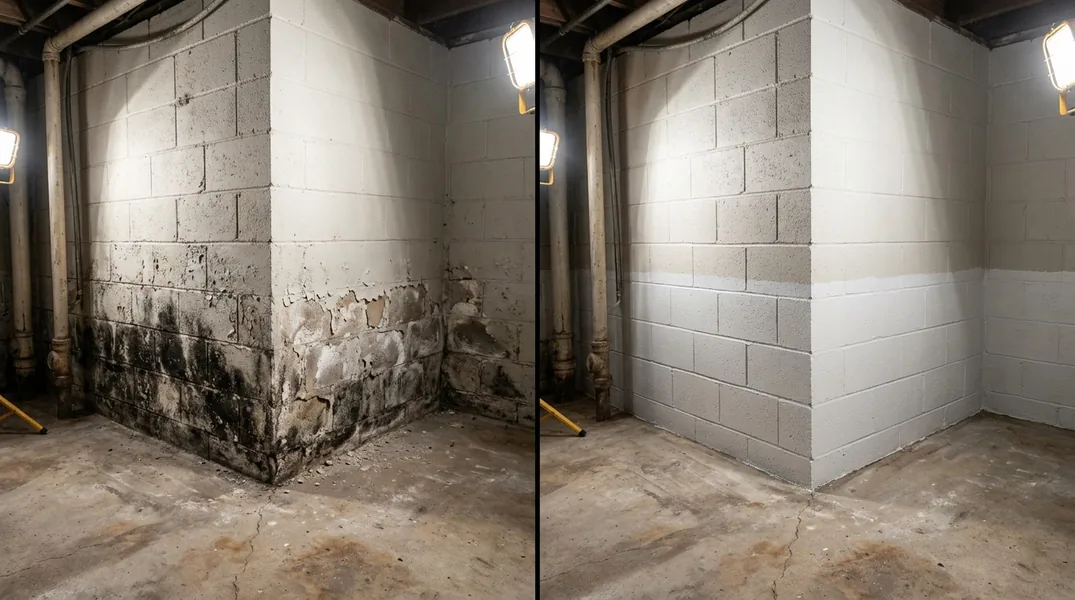
If you notice efflorescence (white powder) on your basement walls, musty odors, or water stains after heavy rain, it is time to call a professional. These are early warning signs that water is already moving through your foundation. In Asheville's climate, small issues can escalate quickly during the spring rainy season or after a tropical storm system moves through the mountains. A local expert can identify whether your home needs interior drainage, exterior membrane work, or a combination of both.
Asheville Waterproofing specializes in helping homeowners throughout the region protect their basements and foundations. Whether you are in a historic home near downtown or a newer build on a hillside, the team can recommend a solution that fits your property and budget. Call (828) 519-1276 to schedule an inspection and get clear answers about the best path forward for your home.
Looking for a professional basement waterproofing contractor in Asheville? Asheville Waterproofing responds fast for all your basement waterproofing needs.
Get a Free QuoteOur services: Basement Waterproofing · Interior Drain Tile System · Exterior Basement Waterproofing